
This vegan kimchi recipe is a delightful twist on the traditional Korean staple, offering a burst of tangy, spicy, and umami flavors. Perfect for those who follow a plant-based diet, this kimchi is not only delicious but also packed with probiotics that are great for your gut health.
Some ingredients in this recipe might not be commonly found in every household. Napa cabbage is a type of Chinese cabbage with a milder flavor and softer texture than regular cabbage. Gochugaru, or Korean red pepper flakes, is essential for authentic kimchi flavor and can be found in Asian grocery stores or online. Daikon radish is a large, white radish with a crisp texture and mild flavor, also typically available in Asian markets.
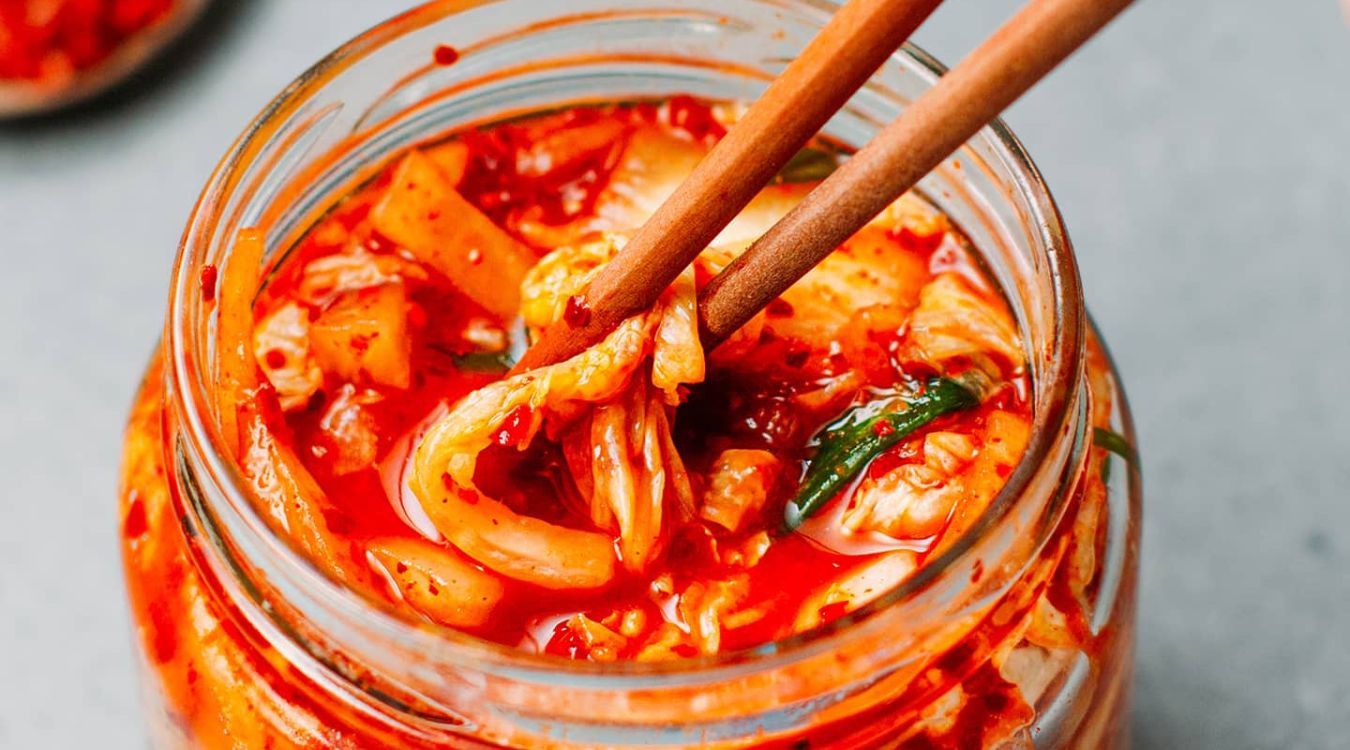
Ingredients For Vegan Kimchi Recipe
Napa cabbage: A type of Chinese cabbage with a milder flavor and softer texture than regular cabbage.
Salt: Used to draw out moisture from the cabbage and start the fermentation process.
Carrot: Adds sweetness and crunch to the kimchi.
Daikon radish: A large, white radish with a crisp texture and mild flavor.
Garlic: Provides a pungent, aromatic flavor essential to kimchi.
Ginger: Adds a warm, spicy note to the mix.
Gochugaru: Korean red pepper flakes that give kimchi its signature heat and color.
Soy sauce: Adds umami depth and saltiness to the kimchi.
Green onions: Adds a fresh, sharp flavor and a bit of color.
Technique Tip for Making Kimchi
When massaging the salt into the cabbage, make sure to do it thoroughly and evenly. This helps to draw out the moisture from the cabbage, which is crucial for the fermentation process. Additionally, using gloves when mixing the spices and vegetables will protect your hands from the spicy gochugaru.
Suggested Side Dishes
Alternative Ingredients
Napa cabbage - Substitute with green cabbage: Green cabbage is more widely available and has a similar texture and crunch to napa cabbage.
Salt - Substitute with sea salt: Sea salt can be used in the same quantity and provides a similar briny flavor.
Carrot - Substitute with zucchini: Zucchini has a similar texture and can absorb flavors well, making it a good alternative.
Daikon radish - Substitute with regular radish: Regular radishes have a similar peppery flavor and crunch.
Garlic - Substitute with garlic powder: Garlic powder can be used in a pinch, though fresh garlic is preferred for its robust flavor.
Ginger - Substitute with ground ginger: Ground ginger can be used if fresh ginger is unavailable, though it has a slightly different flavor profile.
Korean red pepper flakes (gochugaru) - Substitute with crushed red pepper flakes: Crushed red pepper flakes can provide a similar heat, though the flavor will be slightly different.
Soy sauce - Substitute with tamari: Tamari is a gluten-free alternative that has a similar umami flavor to soy sauce.
Scallions (green onions) - Substitute with chives: Chives have a similar mild onion flavor and can be used in the same quantity.
Other Alternative Recipes Similar to Kimchi
How to Store or Freeze Your Kimchi
Ensure your kimchi is fully fermented to your liking before considering storage. This will help maintain its flavor and texture.
Transfer the kimchi into airtight containers. Glass jars with tight-fitting lids are ideal as they prevent air from entering and help maintain the fermentation process.
Store the kimchi in the refrigerator. The cool temperature will slow down the fermentation process, preserving the kimchi for a longer period. Properly stored, it can last for several months.
For freezing, portion the kimchi into smaller servings. This makes it easier to thaw only what you need without exposing the entire batch to air.
Use freezer-safe bags or containers for freezing. Remove as much air as possible from the bags before sealing to prevent freezer burn and maintain the kimchi's quality.
Label the containers with the date of freezing. This helps you keep track of how long the kimchi has been stored and ensures you use the oldest batches first.
When ready to use, thaw the kimchi in the refrigerator overnight. This gradual thawing process helps retain its texture and flavor.
Avoid refreezing kimchi once it has been thawed. Repeated freezing and thawing can degrade its quality and alter its taste.
If you notice any off smells, discoloration, or mold, discard the kimchi. Properly stored kimchi should have a pleasant, tangy aroma and vibrant color.
How to Reheat Leftovers
For a quick and easy method, simply transfer the kimchi to a microwave-safe dish. Cover loosely with a microwave-safe lid or plastic wrap, leaving a small vent. Heat on medium power for 1-2 minutes, stirring halfway through to ensure even heating.
If you prefer a stovetop method, place the kimchi in a small saucepan over medium heat. Add a splash of water or vegetable broth to prevent sticking. Stir occasionally and heat until warmed through, about 3-5 minutes.
For a more traditional approach, consider using a steamer. Place the kimchi in a heatproof dish and set it in the steamer basket. Steam over boiling water for about 5-7 minutes, or until heated through.
If you have an air fryer, preheat it to 350°F (175°C). Place the kimchi in an air fryer-safe dish and heat for 3-5 minutes, shaking the basket halfway through to ensure even heating.
For a unique twist, try reheating kimchi in a skillet. Heat a bit of sesame oil over medium heat, then add the kimchi. Stir-fry for 2-3 minutes until heated through and slightly caramelized for added flavor.
If you’re making a kimchi soup or stew, simply add the leftover kimchi directly to the pot and heat until the soup reaches your desired temperature. This method infuses the kimchi flavor into the broth, enhancing the overall dish.
Best Tools for Making Kimchi
Large bowl: Used to combine and massage the chopped cabbage with salt.
Colander: Essential for rinsing the cabbage under cold water to remove excess salt.
Mixing bowl: Needed to combine the carrot, daikon radish, garlic, ginger, gochugaru, soy sauce, and green onions.
Gloves: Protect your hands from the spice when mixing the cabbage with the other ingredients.
Jar: Used to pack the kimchi mixture tightly for fermentation.
Wooden spoon: Helps in pressing down the vegetables in the jar to remove air bubbles.
Knife: Necessary for chopping the napa cabbage and scallions.
Cutting board: Provides a surface for chopping the vegetables.
Grater: Used for grating the ginger.
Measuring spoons: Ensures accurate measurement of salt, gochugaru, and soy sauce.
How to Save Time on Making Kimchi
Pre-slice vegetables: Prepare the carrot and daikon radish in advance by julienning them the night before.
Use a food processor: Mince the garlic and grate the ginger quickly using a food processor.
Batch preparation: Make a larger batch of kimchi and store it in multiple jars to save time on future meals.
Pre-mix spices: Combine gochugaru, soy sauce, and other spices ahead of time to streamline the mixing process.
Quick rinse: Use a colander to rinse the cabbage thoroughly and quickly.
Vegan Kimchi Recipe
Ingredients
Main Ingredients
- 1 large Napa cabbage chopped
- ¼ cup Salt
- 1 cup Carrot julienned
- 1 cup Daikon radish julienned
- 4 cloves Garlic minced
- 1 tablespoon Ginger grated
- 3 tablespoon Korean red pepper flakes (Gochugaru)
- 2 tablespoon Soy sauce
- 4 scallions Green onions chopped
Instructions
- 1. In a large bowl, combine chopped cabbage and salt. Massage the salt into the cabbage until it starts to soften. Let it sit for 1-2 hours.
- 2. Rinse the cabbage under cold water to remove excess salt. Drain well.
- 3. In a separate bowl, combine carrot, daikon radish, garlic, ginger, gochugaru, soy sauce, and green onions.
- 4. Add the cabbage to the mixture and mix well. Use gloves to protect your hands from the spice.
- 5. Pack the mixture tightly into a jar, pressing down to remove air bubbles. Leave some space at the top for expansion.
- 6. Let the jar sit at room temperature for 1-2 days to ferment. Check daily and press down the vegetables if needed.
- 7. Once fermented to your liking, store the kimchi in the refrigerator.
Nutritional Value
Keywords
More Amazing Recipes to Try 🙂
- Vegan Chow Mein Recipe30 Minutes
- Strawberry Daiquiri Recipe10 Minutes
- Vegan Banh Mi Recipe30 Minutes
- Vegan Quinoa Stuffed Peppers Recipe50 Minutes
- Classic Old-Fashioned Recipe5 Minutes
- Vegan Chili Lime Jackfruit Tacos Recipe35 Minutes
- Vegan Burritos Recipe35 Minutes
- Mai Tai Recipe5 Minutes











Leave a Reply